Protect Your Chimney Before Delaware’s First Hard Freeze
A healthy chimney is not just about clean flues and safe fires. The brick, mortar, and metal on the outside need just as much attention, especially before cold weather settles in. In New Castle, early October is the sweet spot to catch masonry problems before the freeze-thaw cycle starts stressing your chimney.
When water gets into small cracks in the crown, mortar joints, or flashing, it sits inside the masonry. Once temperatures drop below freezing, that water expands, the cracks grow, and damage speeds up. What starts as a small line in the crown or a tiny gap at the roof can turn into loose bricks, leaks, and major chimney masonry repair in New Castle, DE.
Our team at Triple Crown Chimney Solutions works on chimneys across New Castle, Chester, and Delaware Counties, so we see how local weather beats up masonry each fall and winter. Below is a practical, step-by-step checklist you can use to spot trouble in your chimney crown, mortar joints, and flashing before the season puts them to the test.
Spot Freeze-Thaw Red Flags in Your Chimney Structure
Delaware’s fall and winter temperatures often swing above and below freezing in the same week. That constant change makes your chimney expand and contract. Older chimneys, and any that already have small cracks, feel this the most.
Outside, walk around your home and look up at the chimney. Warning signs include:
- Spalling brick, where the faces are flaking or popping off
- Crumbling or missing mortar between bricks
- A chimney that looks like it is leaning or slightly twisted
- White, chalky staining on the masonry, called efflorescence
- Moss, weeds, or other growth coming out of cracks
Inside, pay attention to areas around your fireplace or stove. Signs of moisture and stress can show up as:
- A damp or musty smell near the fireplace
- Water stains or dark patches in the firebox
- Rust on the damper, doors, or firebox components
- Peeling paint, stained trim, or bubbling drywall above the mantel
If you see any of these, it is better to have them checked before cold and wet weather make them worse. Catching issues at this stage usually means more focused chimney masonry repair in New Castle, DE, instead of major rebuilds after a hard winter.
Check the Chimney Crown Before Ice Does the Damage
The crown is the “roof” at the top of your chimney. It is usually made of concrete or mortar and is shaped to shed water away from the flue and brickwork. Because it sits fully exposed at the very top, Delaware’s sun, rain, and frost hit it first and hardest.
From the ground, or with binoculars, you can safely look for:
- Visible cracks on the top surface
- Crumbling or broken edges around the perimeter
- Areas where water seems to pool instead of running off
- Gaps or separation around the flue tile where it exits the crown
Even hairline cracks let water soak into the top course of brick or block. When that water freezes, the expansion can blow off brick faces, open larger gaps, and start a cycle of damage that works its way down the chimney.
Professional fixes depend on how worn the crown is. In some cases, a high-quality sealant can help with minor, tight cracks. If the crown is rough, pitted, or has widespread cracking, resurfacing with a proper crown material is usually the better answer. If the crown is badly broken, sinking, or missing sections, a full rebuild at the top may be needed. All of these repairs hold up better when they are done before repeated overnight freezes take hold.
Inspect Mortar Joints and Brick Faces for Hidden Weak Spots
Mortar joints are the “glue” that holds the chimney bricks together. When they break down, water has a straight path inside your chimney. Over time, that moisture can loosen bricks, corrode metal parts, and weaken the structure.
From the ground or a safe vantage point, look closely at the brickwork. Common mortar and brick problems include:
- Gaps or cracks between bricks where mortar has fallen out
- Deep recesses where the joints have washed away over time
- Joints that look powdery, sandy, or that crumble when touched
- Bricks that are cracked, flaking, or have pieces missing
The standard way to fix worn mortar joints is called tuckpointing or repointing. A trained chimney mason removes loose or damaged mortar to the proper depth, then packs fresh mortar into the joint. Matching the new mortar to the original in strength and appearance is important. Mortar that is too hard or poorly matched can put extra stress on the brick and lead to even more damage.
Because of this, tuckpointing is best left to a qualified chimney mason who understands how chimneys in our area are built. Done correctly and before winter, repointed joints help keep water out and support your chimney for years.
Evaluate Chimney Flashing and Waterproofing Before Heavy Rains
Flashing is the metal where the chimney meets the roof. Its job is to bridge the gap between the roofing materials and the masonry so water cannot run down into your home. When flashing fails, leaks often show up as ceiling stains, soft wood, or musty attic smells.
From the yard or a safe viewpoint, see if you notice:
- Metal that is lifting, bent, or curled at the edges
- Rust streaks or visible corrosion on the flashing
- Dried, cracked, or missing sealant at the seams
- Gaps you can see between the chimney and the roof surface
Inside, look along the ceiling and walls near the chimney chase for water rings, peeling paint, or discolored drywall. These often tie back to flashing leaks that are feeding water into the structure every time it rains.
When flashing fails, water can move into the bricks and mortar around it. As that trapped moisture freezes and thaws, it speeds up spalling, joint damage, and interior decay. Professional flashing repair or replacement, including proper counter-flashing cut into the masonry, creates a much better seal. Many homeowners also choose to add a masonry waterproofing treatment that lets moisture inside the bricks escape but keeps new water from soaking in, which is especially helpful before New Castle’s colder, wet months set in.
Schedule a Professional Fall Inspection and Repair Plan
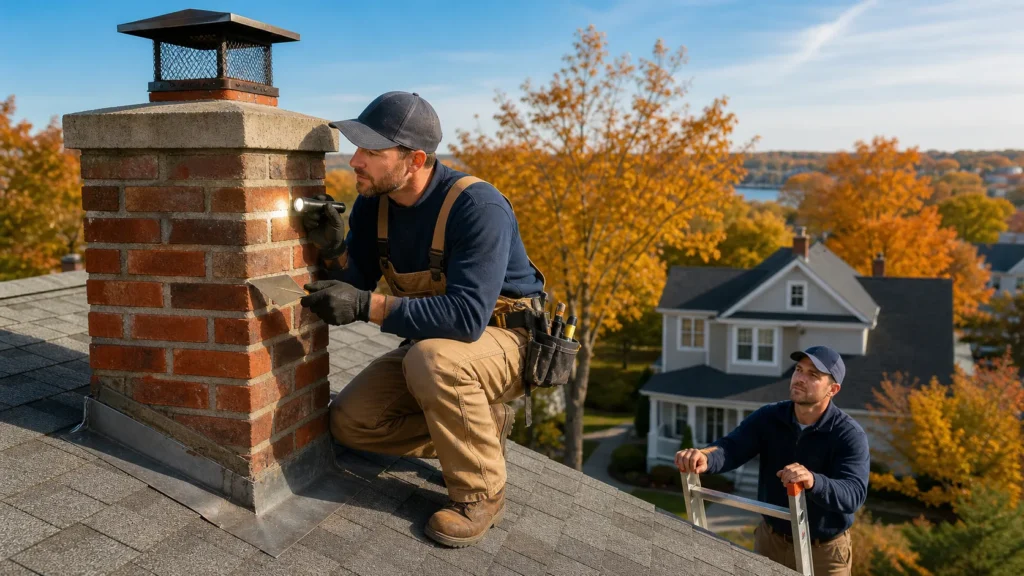
There is only so much you can see from the ground. A licensed, fully insured chimney company can safely get to roof level and give you a full picture of your chimney’s condition, from the crown and mortar joints to the flashing, flue liner, and overall masonry stability.
When our team at Triple Crown Chimney Solutions performs a fall inspection, we follow NFPA-recommended inspection levels and give clear feedback. Homeowners can expect:
- A thorough visual review from the firebox up to the top of the chimney
- Roof-level photos so you can see what we see at the crown and flashing
- Straightforward explanations of any masonry or water issues
- Repair recommendations that separate what needs attention before winter from what can reasonably wait
Booking chimney masonry repair in New Castle, DE early in the fall helps avoid weather delays and packed schedules later on. It also gives enough time for masonry materials, sealants, and waterproofing products to cure properly before they are hit with repeated freeze-thaw cycles. Taking these steps now means less stress, fewer surprises, and a safer, drier home when the temperatures drop and you are ready to enjoy warm, comfortable fires.
Get Started With Your Project Today
Protect your chimney and your home by scheduling professional repairs before minor issues turn into expensive damage. At Triple Crown Chimney Solutions, we provide detailed inspections and reliable chimney masonry repair in New Castle, DE tailored to your property’s needs. Contact us today so we can assess your chimney, explain your options clearly, and get your project on the schedule.