
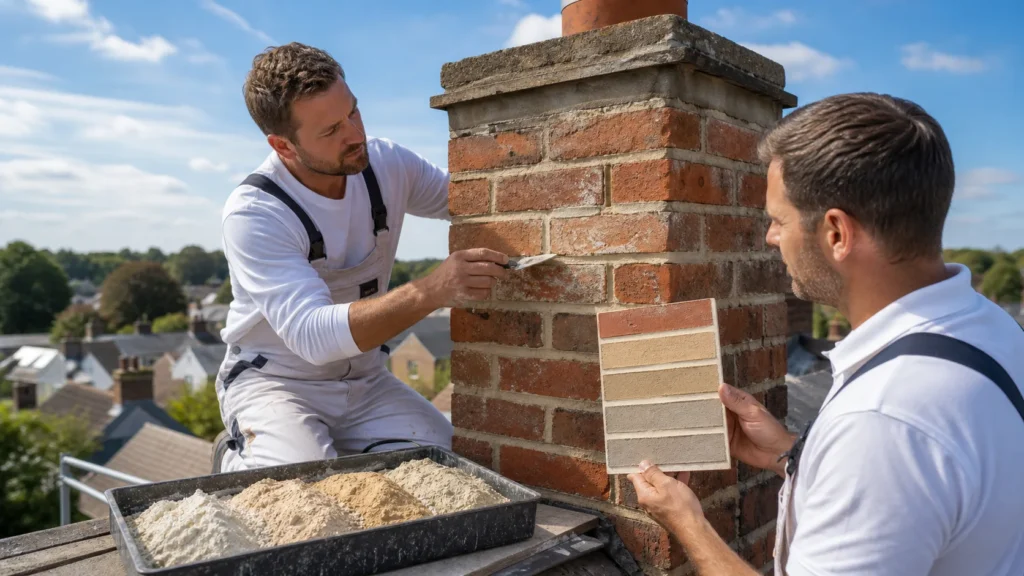
Protect Your Historic Brick Chimney Before Winter Hits
Older brick homes in New Castle and the surrounding counties often have chimneys that have seen many seasons of rain, snow, and heat. Those bricks and mortar joints have done a lot of work over the years, and at some point they start to show it. When mortar begins to fail, the chimney becomes vulnerable to moisture, shifting, and freeze and thaw damage as temperatures drop.
Loose or missing joints let water soak into the brick. That water can freeze inside the masonry, which leads to spalling bricks, cracked faces, staining inside the house, and even bigger structural problems up top. What looks like a few rough joints today can turn into leaning sections of chimney or interior leaks later.
Chimney pointing repair in New Castle is about preserving that historic structure, not just making it look nice from the street. Done the right way, it respects the original materials and craftsmanship, while giving the chimney a fresh, tight weather shell. We will walk through how lime and cement mortars differ, how pros match color and texture, and why the shape of the joint itself matters for both performance and appearance.
Why Chimney Pointing Repair Matters for New Castle Homes
Our local climate in New Castle, Chester, and Delaware Counties is hard on chimneys. We see damp fall weather, cold winters with freeze-thaw cycles, and humid summers. All that change makes old mortar expand and contract, and the weak spots show up first along the chimney where everything is exposed.
Repointing is not the same as smearing a little fresh mortar over a crack. Proper chimney pointing repair means:
- Carefully grinding or raking out loose, soft, or cracked mortar
- Cleaning the joint so new material bonds well
- Packing new mortar back to the right depth and profile
- Tooling the joint so it sheds water and matches the original look
This process restores the outer shell that keeps water out of the bricks and out of your home. When repairs are delayed, small gaps grow. Water runs behind the bricks, bricks begin to loosen, and leaks can show up in attics, walls, or around fireplaces.
If masonry damage reaches the flue area, it can also affect how your fireplace or wood stove vents. In serious cases, that can raise the risk of smoke or carbon monoxide entering living spaces. On the other hand, when repointing is done correctly, it can add decades of life to a historic chimney and help protect the value of the whole house.
Lime vs. Cement Mortar in Historic Brick Chimneys
Many older brick homes in our area were built with lime-based mortar. Lime mortar is softer and more flexible than most modern mixes. It allows the brickwork to move a little with seasons and building settling, and it lets moisture evaporate out of the wall instead of trapping it.
Modern Portland cement mortars are harder and less forgiving. On newer brickwork designed for them, they can perform well. On older, softer bricks, they are often too strong. When a very hard cement mortar is packed between softer historic bricks, several problems can show up:
- Bricks crack or spall while the joints stay rigid
- Moisture gets locked in the bricks instead of the mortar
- Joints lose their ability to flex with small movements
A professional chimney company will study the existing mortar to find the right match. That might include looking at:
- Age and style of the home
- Color of the old mortar and sand
- How easily the mortar can be scratched or removed
- Sometimes lab testing when the mix is not clear
From there, the right blend is chosen, whether it is a high-lime mix, a lime and cement blend, or a modern cement mix for newer work. The goal on historic chimneys is sacrificial mortar. That means the mortar is the part that slowly wears and gets repaired over time, so the original bricks stay intact as long as possible.
Matching Mortar Color, Texture, and Joint Profiles
When you look at a chimney from the yard, your eye picks up changes in color and texture right away. If new mortar is too bright, too dark, too smooth, or the wrong shade, it stands out. On a highly visible chimney, that can take away from the character of an older home.
To blend new work with old, pros pay close attention to:
- Sand type and color, which often drives the main shade
- Cement or lime color
- Small amounts of pigment when needed
- How the mortar looks after it starts to dry, not just when it is wet
Test batches and small sample areas help fine-tune the match so the repair disappears into the wall as much as possible.
Texture also matters. Coarse sand gives a grainy look, while finer sand looks smoother. The way the joint is finished (also called tooling) affects both looks and performance. Common joint styles include concave, weathered, flush, struck, and beaded.
Joint profile is more than a style choice, it also changes how water runs off the chimney. Concave and slightly weathered joints often shed water better in our wet and freeze and thaw climate than deep recessed or rough, uneven joints. Well-shaped joints stop water from sitting on tiny ledges, which helps cut down on long-term moisture problems.
Fall Checklist: Is Your Chimney Ready for Heating Season?
As cooler weather comes in and you start thinking about firing up the fireplace or wood stove, it is a good time to give the chimney a quick visual check from the ground. Some warning signs that your mortar may need attention include:
- Crumbling or powdery joints between bricks
- Gaps where mortar has fallen out completely
- White, chalky staining on the brick surface, called efflorescence
- Dark streaks, damp spots, or peeling paint inside near the chimney
- Musty or damp smells around the fireplace, even when it has not rained recently
Fall is a smart time for chimney pointing repair in New Castle, because the temperatures tend to be moderate and not too hot or too cold. That helps new mortar cure properly and gives you a tighter, safer chimney before heavy winter use and storms move in.
It also makes sense to combine masonry work with a full chimney inspection and sweep. When access equipment is set up, it is much easier to check the crown, cap, flashing, and the visible parts of the liner for hidden issues. Fixing small mortar problems now helps avoid more expensive brick replacement, major structural repairs, and interior leak damage later in the heating season.
How Triple Crown Chimney Protects Your New Castle Chimney
Triple Crown Chimney Solutions is a licensed, fully insured chimney company that works on homes throughout New Castle, Chester, and Delaware Counties. We handle inspections, sweeping, repairs, relining, waterproofing, and wood stove services, and that includes working on many older brick chimneys in our area.
For chimney pointing repair, our process typically includes:
- A detailed inspection and photos of problem areas
- Mortar analysis to choose the right type of mix for the age and style of your chimney
- Careful removal of weak or damaged joints without harming the surrounding brick
- Repointing with matching color, texture, and joint profile for both performance and curb appeal
- Discussion of waterproofing options when they make sense for long-term protection
We also look at the whole chimney system, from masonry and crown to cap, liner, and flashing, to help it work safely with your fireplace, wood stove, or other heating appliances. That way, your historic brick chimney can stay both attractive and dependable as the weather turns colder.
Get Started With Your Project Today
If your mortar joints are starting to crack or crumble, now is the ideal time to schedule professional chimney pointing repair in New Castle. At Triple Crown Chimney Solutions, we carefully assess your chimney, explain our recommendations in plain language, and complete the repair work with long-lasting materials. We focus on protecting your home from water damage and preserving the look and safety of your chimney for years to come. Reach out today so we can inspect your chimney and get your repairs on the calendar.